

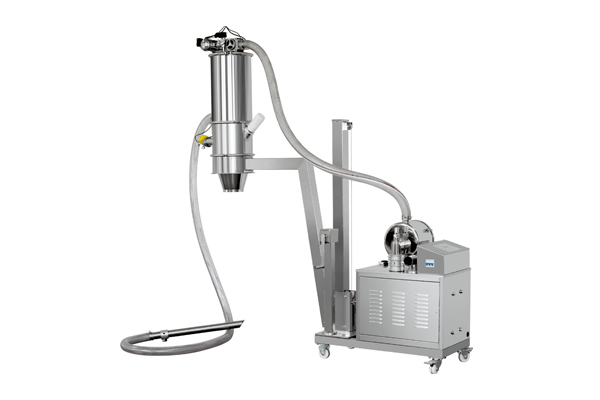


Precision Turnkey Projects is leading Vacuum Transfer System Manufacturers in India. We are trusted Suppliers and Traders in India. Our Vacuum Transfer Systems are advanced material handling solutions for the safe, efficient, and contamination-free transfer of powders, granules, pellets, and other dry materials through enclosed pipelines using vacuum technology, minimizing product loss and dust generation.
Our Vacuum Conveying Systems, Vacuum Conveyor Systems, and Industrial Vacuum Transfer Systems provide efficient Material Handling Solutions for pharmaceutical, food processing, chemical, cosmetic, nutraceutical, plastic, and manufacturing industries. We offer customized Powder Transfer Systems, Vacuum Material Handling Systems, and Bulk Material Handling Systems for accurate, automated, reliable, and high-quality material movement.
Looking for reliable Small vacuum transfer system manufacturers in india? Leading manufacturers provide high-performance vacuum transfer systems designed for the safe, hygienic, and efficient handling of powders, granules, and other bulk materials across industries such as pharmaceuticals, food processing, chemicals, nutraceuticals, and cosmetics. These systems offer automated material conveying, reduced product contamination, improved operator safety, and precise transfer performance. When selecting a vacuum transfer system manufacturer in India, consider factors such as system capacity, material compatibility, automation options, hygienic design, customization, installation support, and after-sales service to ensure a solution that meets your specific production requirements.
A Vacuum Transfer System is an automated conveying solution designed to move powders, granules, pellets, tablets, and other dry materials from one location to another using vacuum pressure. The system pulls the material through a closed pipeline and transfers it into a receiving vessel or processing equipment.
Unlike conventional transfer methods, vacuum-based systems reduce material contamination, minimize dust exposure, and provide controlled movement of sensitive products. They are suitable for handling fine powders, granules, tablets, pellets, and other dry materials.
A typical Vacuum Material Handling System consists of a vacuum pump, receiver, filter unit, conveying pipeline, control panel, and discharge mechanism. These components work together to ensure smooth, accurate, and continuous material transfer for different industrial applications.
The working principle of a Vacuum Transfer System is based on creating a pressure difference between the source and destination points. A vacuum pump generates negative pressure inside the conveying line, which creates suction force to pull the material through the pipeline.
The material enters the transfer line from the supply container and moves along with the airflow created by the vacuum. Filters separate the transported material from the air, allowing only clean air to pass through the vacuum unit.
Once the required quantity of material reaches the receiving container, the vacuum cycle stops, and the material is discharged. This automated process ensures accurate, clean, and efficient material transfer.
Modern Industrial Vacuum Transfer Systems are suitable for handling fine powders, pharmaceutical ingredients, food materials, chemicals, plastic granules, and other dry bulk products where controlled and hygienic conveying is required.
As we are leading Small vacuum transfer system manufacturers in india, our Types are designed to meet different application requirements and industry standards, including the following types:
As a trusted Vacuum Transfer System Suppliers in India, we serve businesses across various industries that meet professional visual communication requirements.
| Specifications | Vacuum Transfer System |
|---|---|
| Body Material | Mild Steel |
| Capacity | 1-2 tons/hr |
| Input Voltage | 240 V |
| Air Consumption | 1.3 kW |
| Air pressure | 10 bar |
| Frequency | 50 Hz |
| Automation Grade | Automatic |
| Surface Finishing | Polished |
| Length | 10 feet |
| Speed | 60 m/min |
| Surface Treatment | Galvanized |
| Usage | Industrial |
As Best vacuum transfer system manufacturers in india, our features ensure high precision, durability, and consistent performance.
As Vacuum Transfer System Traders in India, our products provide several benefits including consistent quality, smooth finish, and long service life.
Explore our Dust Collector System Manufacturers in India.
As Vacuum Transfer System Suppliers in India, our all types are used in various types of industrial sectors such as:
Explore our Storage Silo System Manufacturers in India applications.
As one of the leading Best vacuum transfer system manufacturers in india, we deliver premium-quality solutions designed to meet diverse industrial requirements. Here's why we stand out:
Choose Precision Turnkey Projects is leading Best vacuum transfer system manufacturers, Suppliers and Traders in India. Our Vacuum Conveying Systems provide efficient, hygienic, and customized solutions for transporting powders, pellets, and granules across various industries. We offer Pharma Vacuum Transfer Systems, food-grade vacuum transfer solutions, and industrial vacuum conveying equipment designed to reduce contamination risks, improve efficiency, and deliver long-term performance. Contact us for Vacuum Transfer System quotation, price details, and customized solutions in india.
1. What is a Vacuum Transfer System?
A Vacuum Transfer System is an automated solution for transferring powders, granules, and dry materials. It uses vacuum pressure to move materials through enclosed pipelines safely and efficiently. It helps reduce dust, contamination, product loss, and manual handling.
2. How does a Vacuum Transfer System work?
The system creates negative pressure using a vacuum pump or vacuum generator. This vacuum draws material through a closed pipeline into a receiving vessel. Filters separate the material from the conveying air before discharge.
3. What materials can be transferred using a Vacuum Transfer System?
Vacuum Transfer Systems can handle powders, granules, pellets, tablets, and other dry materials. They are suitable for pharmaceutical, food, chemical, plastic, cosmetic, and nutraceutical products. System selection depends on material density, particle size, flowability, and other properties.
4. What are the benefits of a Vacuum Transfer System?
It provides enclosed, dust-controlled, and hygienic material transfer. The system reduces product wastage, contamination risks, and manual material handling. It also improves workplace safety, process efficiency, and automation.
5. Where are Vacuum Transfer Systems used?
Vacuum Transfer Systems are used in pharmaceutical, food, chemical, plastic, cosmetic, and nutraceutical industries. They can transfer materials between hoppers, mixers, blenders, reactors, and filling equipment. They are ideal for controlled and efficient bulk material handling.
6. Are Vacuum Transfer Systems suitable for pharmaceutical applications?
Yes, Vacuum Transfer Systems are widely used for pharmaceutical material handling. Their enclosed design helps maintain hygienic and controlled transfer conditions. They can be configured with suitable filters and stainless-steel product-contact components.
7. What is the difference between vacuum conveying and pressure conveying?
Vacuum conveying pulls material through a pipeline using negative pressure. Pressure conveying pushes material using positive pressure from the conveying air source. The suitable method depends on material, distance, capacity, and plant configuration.
8. Can a Vacuum Transfer System be customized?
Yes, Vacuum Transfer Systems can be customized according to specific process requirements. Customization can include capacity, pipeline layout, receiver size, filtration, and automation. The system can also be integrated with existing production and processing equipment.
9. What capacity can a Vacuum Transfer System handle?
The capacity depends on material characteristics, conveying distance, pipeline size, and system configuration. A typical system can be designed for capacities such as 1–2 tons per hour. The required capacity should be finalized according to the specific application requirements.
10. How do I choose the right Vacuum Transfer System manufacturer in India?
Choose a manufacturer with proven engineering expertise and experience in vacuum conveying systems. Consider customization, system quality, automation, installation, testing, and after-sales support. A reliable manufacturer should provide a solution matched to your material and production requirements.
Designed & Developed by