

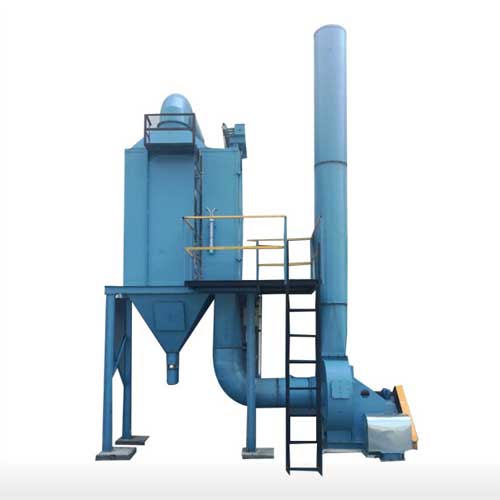


Precision Turnkey Projects is leading Dust Collector System Manufacturers in India. We are trusted Suppliers and Traders in India. A Dust Collector System is an essential industrial air filtration solution designed to remove dust particles, fumes, and airborne contaminants generated during manufacturing processes.
Modern industrial dust collection systems are widely used in factories, production units, processing plants, and manufacturing facilities where dust generation is common. Our Dust Collector Systems are designed for different industrial requirements, including powder handling, grinding, cutting, processing, and other dust-generating operations.
Advanced solutions such as automatic dust collectors, cyclone dust collectors, industrial dust collector machines, cartridge dust collectors, baghouse dust collectors, and pulse jet dust collectors provide efficient dust removal and filtration. By capturing dust directly from the source, these systems help protect workers, reduce equipment contamination, improve production conditions, and create a cleaner industrial environment.
Looking for reliable Best dust collector system manufacturers in India? Leading Indian manufacturers design and supply advanced industrial dust collection systems for controlling dust, fumes, smoke, and airborne particles across industries such as cement, pharmaceuticals, chemicals, metalworking, foundries, woodworking, food processing, and manufacturing. These systems include baghouse dust collectors, pulse jet dust collectors, cartridge dust collectors, cyclone separators, wet scrubbers, and customized dust extraction systems, engineered according to airflow, dust characteristics, temperature, and application requirements. When choosing a dust collector manufacturer in India, consider product quality, filtration efficiency, customization capabilities, energy efficiency, installation support, spare availability, and after-sales service. A professionally designed industrial dust collector system can help improve workplace cleanliness, minimize airborne dust, protect equipment, and support efficient production operations.
A Dust Collector System is an industrial air cleaning equipment designed to collect and remove dust, particles, and other airborne pollutants from manufacturing environments. The system captures contaminated air, filters dust particles, and releases clean air back into the workplace or atmosphere.
A complete dust collection system generally includes components such as dust hoods, ducting, filters, blowers, collection chambers, and dust disposal units. These components work together to provide effective dust extraction and filtration according to the application requirements.
In systems such as cyclone dust collectors, centrifugal force separates larger and heavier dust particles from the air stream. Fine particles can then be captured through suitable filter media. The collected dust is stored in collection bins or removed through suitable dust disposal and automatic cleaning arrangements.
The working principle of a Dust Collector System is based on capturing contaminated air and separating dust particles through filtration technology.
During operation, a blower creates suction that draws dusty air from different production areas through duct pipelines. The contaminated air enters the dust collector unit, where filters or separation mechanisms remove dust particles.
In systems such as cyclone dust collectors, centrifugal force separates heavy dust particles from the airflow. Fine particles are captured through filter media, while clean air is released back into the environment. The collected dust is stored in collection bins or discharged through automatic cleaning mechanisms for easy disposal.
As we are leading Small Dust Collector System Manufacturers in India, our Types are designed to meet different application requirements and industry standards, including the following types:
As a trusted Top Dust Collector System Manufacturers in India, we serve businesses across various industries that meet professional visual communication requirements.
| Parameter | Specification | Details |
|---|---|---|
| System Type | Bag Filter, Cartridge Filter, Cyclone Dust Collector, Pulse Jet Dust Collector | Selection depends on dust particle size, load, and process temperature; pulse jet is most common for continuous industrial operation |
| Air Flow Capacity | 500 CMH to 100,000+ CMH (Customizable) | Sized based on process air volume, number of pickup points, and duct velocity requirements |
| Filtration Efficiency | Up to 99.99% for fine dust particles | Higher efficiency achievable with PTFE membrane or HEPA-grade filter media for hazardous/fine dust |
| Filter Media | Polyester, PTFE Membrane, Nomex, Cellulose, Polypropylene | Media selected as per dust type, moisture content, and operating temperature (Nomex for high heat, PTFE for fine/sticky dust) |
| Particle Size Captured | As low as 0.3 microns | Sub-micron capture suitable for pharma, food, and combustible dust applications |
| Number of Filter Bags/Cartridges | As per capacity (customizable) | Determined by air-to-cloth ratio and required filter media area for the given air volume |
| Bag Cage Material | Galvanized Steel / SS304 | Supports filter bag shape and prevents collapse during suction; SS304 for corrosive or food-grade applications |
| Operating Pressure | 100–300 mmWC | Differential pressure gauge monitors pressure drop across filters to indicate cleaning requirement |
| Cleaning Method | Pulse Jet, Reverse Air, Mechanical Shaking | Pulse jet allows continuous operation without shutdown; cleaning cycle typically 0.1-0.2 sec pulse duration at 10-60 sec intervals |
| Compressed Air Requirement | 5-7 bar (80-100 psi) | Required for pulse-jet cleaning valves; air consumption approx. 0.75 SCFM per 1,000 CFM of process airflow |
| Cleaning Control | Timer-based / PLC with Differential Pressure Sensor | Automatically triggers cleaning cycle based on pressure drop, minimizing manual intervention and downtime |
| Construction Material | Mild Steel (MS), SS304, SS316 | MS for standard industrial dust; SS304/SS316 for food-grade, pharma, or corrosive dust applications |
| Hopper Design | Conical / Pyramidal (Customizable Angle) | Steep hopper angle prevents dust bridging and ensures smooth discharge, especially for fine or sticky powders |
| Dust Discharge System | Rotary Airlock Valve / Screw Conveyor / Manual Slide Gate | Continuous discharge systems recommended for high dust-load applications to prevent hopper overflow |
| Fan Type | Centrifugal Blower / Industrial Exhaust Fan | Selected based on required static pressure and air volume; can be ID (induced draft) or FD (forced draft) mounted |
| Motor Power | 0.5 HP to 100 HP (Depending on Capacity) | Energy-efficient motors sized as per system air flow and static pressure requirement |
| Voltage | 230V / 415V AC, 50 Hz | Standard for Indian industrial power supply; customizable for export/international requirements |
| Operating Temperature | Ambient to 250°C (Higher with Special Filters) | High-temperature filter media (Nomex/PTFE) required for hot process gas applications like kilns or dryers |
| Ducting | MS/GI Ducting with Damper Valves | Sized for optimal conveying velocity to prevent dust settling inside ducts |
| Automation Grade | Automatic (PLC-based) | Includes automatic cleaning cycle, pressure monitoring, and safety interlocks |
| Safety Features | Explosion Venting / Spark Arrestor (Optional) | Recommended for combustible dust applications as per NFPA/OSHA-aligned safety practices |
| Noise Level | Below 85 dB(A) at 1 meter | Ensures compliance with industrial workplace noise safety standards |
| Usage/Application | Industrial Dust & Fume Extraction | Pharmaceuticals, chemicals, cement, food processing, metalworking, woodworking, pneumatic conveying support |
| Certification | ISO 9001:2015 Certified | Quality-assured design and manufacturing standards |
| Warranty | 1 Year (AMC available) | After-sales support and annual maintenance contract for filter replacement and servicing |
| Customization | Available | Turnkey dust collection solutions engineered as per dust characteristics, air volume, and layout constraints |
As Dust Collector System Traders in India, our products provide several benefits including consistent quality, smooth finish, and long service life.
As Industrial dust collector manufacturers in India, our features ensure high precision, durability, and consistent performance.
As Dust Collector System Suppliers in India, our all types are used in various types of industrial sectors such as:
As one of the leading Dust Collector System Traders in India, we deliver premium-quality solutions designed to meet diverse industrial requirements. Here's why we stand out:
Choose Precision Turnkey Projects is leading Dust Collector System Manufacturers, Suppliers and Traders in India. A Dust Collector System plays an important role in maintaining clean air quality, protecting workers, and improving industrial productivity. Advanced solutions such as industrial dust collection systems, cyclone dust collectors, and automatic dust collector machines provide efficient control of dust and airborne contaminants. Industries that generate dust during manufacturing processes can benefit from reliable dust collection technology to improve safety, reduce maintenance costs, and achieve better environmental compliance. Investing in a high-quality dust collector system ensures cleaner operations and long-term industrial efficiency. Contact us today to discuss your requirements and get the right dust collection solution for your industry.
The air-to-cloth ratio is calculated by dividing the airflow volume by the total effective filter area. The required ratio depends on dust characteristics, filter media, and operating conditions.
Pressure drop is the difference in air pressure between the inlet and outlet of the dust collection system. It is influenced by filter condition, airflow, ducting, dust loading, and system resistance.
Low suction can result from clogged filters, blocked ducting, air leakage, incorrect fan operation, excessive system resistance, or improper system sizing.
A dust collector may lose suction because of filter loading, dust buildup, damaged ducting, blocked components, worn seals, or reduced blower performance.
Dust collection ductwork should be designed according to required airflow, material characteristics, duct diameter, air velocity, system length, bends, and pressure losses to maintain effective dust capture.
An undersized dust collector may provide insufficient airflow and filtration capacity, resulting in poor dust capture, increased filter loading, and reduced overall system performance.
Energy consumption can be reduced by optimizing airflow, selecting an appropriately sized blower, minimizing unnecessary pressure losses, maintaining clean filters, and using efficient system controls.
Dust leakage can occur because of damaged filter media, loose seals, improper installation, overloaded filters, housing gaps, or inadequate maintenance.
Common signs include increased pressure drop, reduced airflow, declining dust collection performance, visible dust emissions, damaged filter media, or frequent cleaning requirements.
Important information includes the type of dust, particle characteristics, dust generation rate, required airflow, number of collection points, conveying distance, operating temperature, equipment layout, and filtration requirements.
Designed & Developed by